Does Homeowners Insurance Cover Wildfire Damage in Colorado?
Post date :

Founder, Western Slope Law





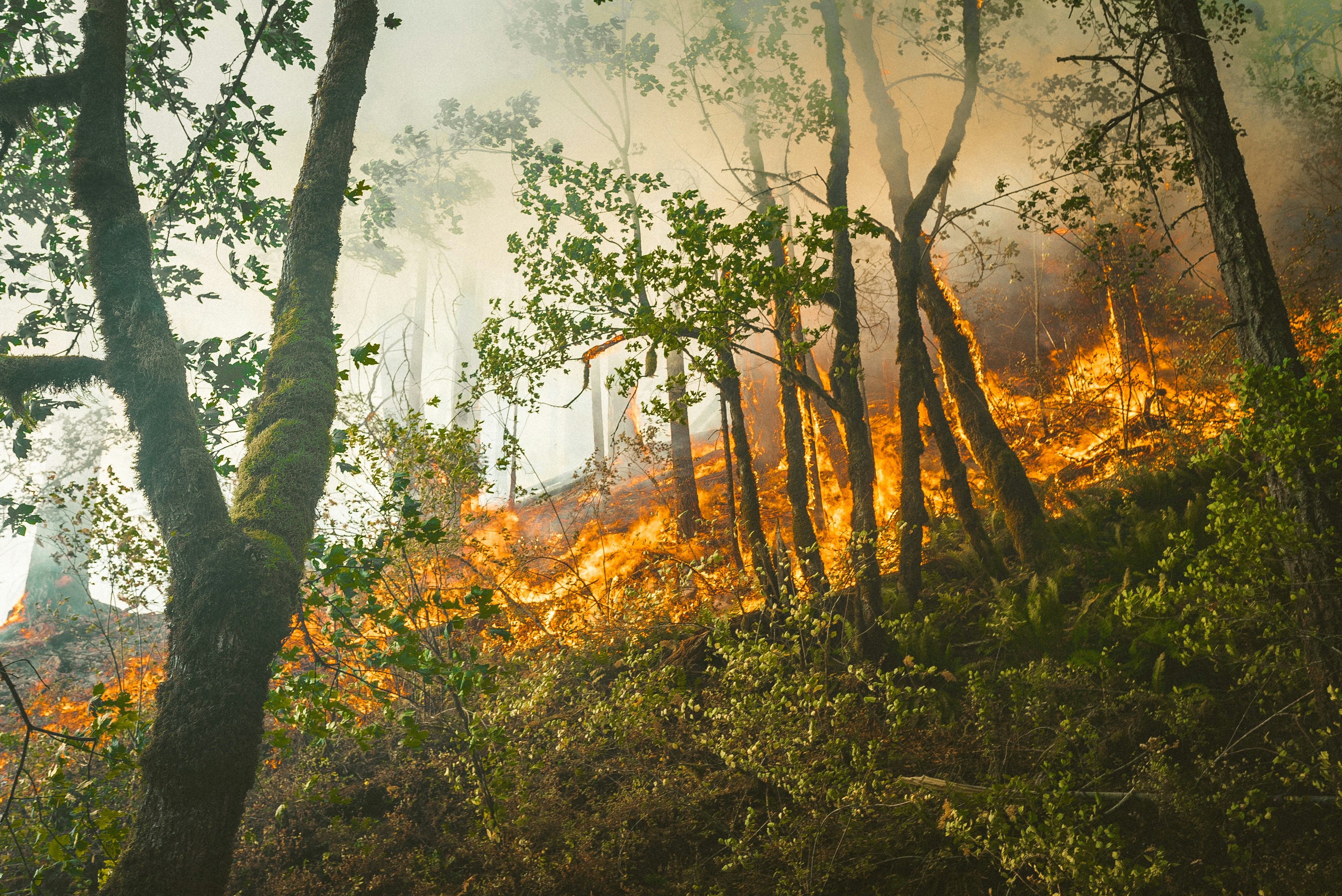
Colorado has become one of the most dangerous wildfire states in the country. The Marshall Fire in December 2021 destroyed more than 1,000 homes in Boulder County — the single most destructive wildfire in Colorado history. The Cameron Peak Fire burned over 200,000 acres. As fire seasons stretch longer and push closer to residential areas, homeowners from Glenwood Springs to Fort Collins to Louisville are asking the right question: Am I actually covered?
The short answer is yes. The honest answer is: probably not enough.
What your fire and wildfire coverage actually does
Most Colorado homeowners carry what's called an HO-3 policy. Fire is a named peril under that policy, which means if a wildfire damages your home, your insurer owes you. That much is settled. The fight starts when you get to the dollar figures.
It works the same whether the flames come from a kitchen stove or a hillside two miles away. A house fire and a wildfire are the same covered peril on a standard HO-3 — so yes, home insurance covers fire, and your policy doesn't treat the two differently. What changes after a wildfire is scale: hundreds of homes burning at once, a regional rebuild backlog, and excluded follow-on hazards like mudslides. That's where the coverage holds but the dollars fall short.
Standard coverage breaks into four buckets.
Dwelling coverage — called Coverage A — pays to rebuild the physical structure: walls, roof, foundation, attached garage, built-in appliances. This is the one that matters most when a fire comes through. Other structures coverage (Coverage B) handles detached buildings: a fence, a shed, a guesthouse. Typically set at 10% of whatever Coverage A is worth, which is often not enough. Personal property coverage (Coverage C) reimburses you for everything you owned inside — furniture, clothing, electronics. Here's where most homeowners get the first bad surprise: policies may pay actual cash value (what your five-year-old couch is worth today, after depreciation) or replacement cost value (what it costs to buy a comparable couch new). The difference between those two numbers can be enormous. If your policy pays actual cash value, your insurer is going to hand you pennies and call it square. Finally, loss of use (Coverage D) covers the cost of living somewhere else while your home is rebuilt — rent, meals, hotel stays.
That last one matters more than people realize, because rebuilds in Colorado are taking 18 to 30 months right now. Sometimes longer.
The questions homeowners ask — and the answers they don't expect
Will insurance cover a full rebuild?
Often, no. And this is where the real problem is.
Your dwelling coverage has a limit — a ceiling on what your insurer will pay. If your home is insured for $400,000 but it costs $680,000 to rebuild, you are on the hook for $280,000. That gap is yours to fund. After the Marshall Fire, hundreds of families discovered they were underinsured by six figures. Some by more. They had policies. They paid their premiums. They still couldn't afford to rebuild. It is therefore crucially important that Colorado homeowners proactively take measures to ensure their coverage limits are high enough to rebuild their home in the event of a total loss. Insureds can, and should, ask for higher limits when purchasing a policy.
What is extended replacement cost coverage?
It's an endorsement — an add-on to your base policy — that raises the ceiling by a fixed percentage, typically 20% to 50% above your dwelling limit. Guaranteed replacement cost goes further: it pays whatever rebuilding actually costs, regardless of the limit. Both are available from most Colorado carriers, and both are worth asking about. The premium bump is modest. The protection, however, is very much worth it.
What about temporary housing?
Coverage D pays for it. But watch the cap. Many policies set loss of use at 20% of dwelling coverage. On a $400,000 policy, that's $80,000. In Boulder County in 2022, $80,000 in rental money didn't last long — the Marshall Fire displaced thousands of families simultaneously, and the rental market responded accordingly. If your rebuild runs two years and your loss of use runs out at month ten, you're paying out of pocket. Ask your agent what the actual dollar limit is, whether it can be increased, and what the maximum duration is. Buy as much coverage as the insurer will offer you.
Does smoke damage count?
Yes. You don't need flames on your property to have a covered claim. Smoke and soot from a nearby wildfire are generally covered under standard HO-3 policies. That said, insurers routinely contest the scope of smoke intrusion and the cost to remediate it. Document everything immediately — video, photographs, room by room — before any cleanup begins. You may also consider hiring an industrial hygienist.
What about my car?
Your homeowners policy doesn't cover it. A vehicle destroyed in a wildfire is covered under the comprehensive portion of your auto policy. If you don't carry comprehensive, you have no coverage for the vehicle.
What about fencing, trees, landscaping?
Fencing and detached structures may fall under Coverage B, but the limits often don't reflect what replacement actually costs in today's labor market. Trees and landscaping are typically covered under personal property, with sublimits — often $500 per tree, $1,500 to $2,000 total. If the fire takes your mature ponderosa pine windbreak, don't expect your insurer to replant it. If your property has substantial and mature landscaping, ensure any sublimits for this coverage are adequate for replacement in the event of a loss.
What the policy excludes
Fire is covered. But several things that follow a wildfire are not.
Post-fire mudslides and debris flows. When a wildfire strips a hillside bare, the next rainstorm can send a wall of mud and debris into the properties below. That damage is typically excluded as earth movement under a standard homeowners policy. Colorado has watched this happen — burn scars above Glenwood Canyon, the Grizzly Creek Fire area, the 416 Fire corridor — and the homeowners caught in subsequent debris flows have found themselves without coverage. A separate earth movement policy is required. Most people don't have one.
Post-fire flooding. The same burned terrain that causes mudslides causes flooding. Standard homeowners policies generally exclude flood damage unless it’s caused by a burst water pipe. The National Flood Insurance Program through FEMA offers coverage, as do private flood insurers. If you live in a watershed that drains through burned acreage, this isn't theoretical.
Ordinance and law. Here's one that surprises people: when a home is rebuilt after a total loss, local building codes may require upgrades that didn't exist when the original home was built — updated electrical, fire-resistant materials, accessibility requirements, energy code compliance. Your base policy generally doesn't cover the cost of those upgrades. Ordinance or law coverage is a separate endorsement, and it can represent tens of thousands of dollars in out-of-pocket exposure if you don't have it. It’s critical for Colorado homeowners to have ordinance and law coverage – the more the better.
High-value personal property. Jewelry, fine art, firearms, collectibles — standard policies put sublimits on these, often $1,500 to $2,500 for jewelry. If the actual value of what you own exceeds those sublimits, you need scheduled endorsements for specific items.
Business property. Work from home? Your business equipment and inventory may be excluded or heavily limited under a residential policy. A separate business owners policy, or a home business endorsement, is the fix.
The gap between coverage and cost: Colorado's defining problem
The underinsurance problem in Colorado isn't a secret anymore. It's a pattern.
Three things drive it.
First, construction costs have risen sharply. Labor shortages, supply chain disruptions, and general inflation have pushed the cost to build in Colorado to somewhere between $300 and $500 per square foot for standard construction — and much higher in mountain communities. A home that cost $300 per square foot to build in 2015 costs significantly more today. Policies that were set to adequate limits five years ago may now be short by 50%.
Second, demand surge. When a wildfire destroys 500 or 1,000 homes at once, the contractors and materials needed to rebuild them don't appear from nowhere. Demand surges. Prices follow. The Marshall Fire created a regional construction crisis; rebuild costs spiked above already-elevated baselines. Standard policies don't account for demand surge. The gap widens after the disaster, at exactly the moment when the numbers matter most.
Third, the insurance market itself is contracting. Several major carriers have stopped writing new policies in Colorado's high-risk areas. Some have non-renewed existing policyholders in wildfire-adjacent ZIP codes. Homeowners who lose private market access are pushed toward the Colorado FAIR Plan — the state's insurer of last resort, which provides basic fire coverage but at limits that routinely fall short of full rebuilding cost. FAIR Plan policies typically need to be supplemented with a difference in conditions policy to fill the holes, and many homeowners don't know that when they sign up.
The families who came out of the Marshall Fire financially intact were the ones who had done the homework before the fire. Not after.
What to do before the next fire season
Pull your declarations page and read the dwelling coverage limit. Compare it against current construction costs — your insurer, an independent appraiser, or a contractor familiar with your area can help you run those numbers. If the limit looks low relative to current costs, it probably is. Ask for higher limits.
Ask your agent specifically about extended replacement cost or guaranteed replacement cost coverage. Ask about ordinance and law coverage. Ask what your loss of use dollar limit actually is and whether it can be raised. If you own high-value items, ask whether they're scheduled.
If you live in a watershed that drains through fire-prone terrain, look into flood insurance — not because FEMA tells you to, but because post-fire flooding is a documented, recurring problem in Garfield County, Eagle County, and across the Western Slope.
Finally, ask whether your insurer offers wildfire mitigation discounts. Completing a Firewise USA assessment, maintaining 100 feet of defensible space, or installing a Class A roof can reduce premium costs and reduce the likelihood your insurer declines to renew your policy.
Do this now. A wildfire gives you no notice and no time to correct an underinsured policy.
The bottom line
Your homeowners policy covers wildfire. That's true. It's also the beginning of the analysis, not the end. What the policy covers and what it costs to make a family whole after a fire are two different questions — and in Colorado in 2026, the gap between those two numbers is often the most consequential financial fact in a homeowner's life.
Read your policy. Know your limits. Close the gaps before the smoke arrives.
This article is written for general informational purposes and does not constitute legal or insurance advice. Coverage terms vary by policy, carrier, and circumstance. If you have questions about a specific claim or coverage dispute, speak with a licensed Colorado attorney or insurance professional.
You're not alone.
Work with an award-winning, experienced lawyer who can make a difference in your case.
Award-winning representation across Colorado's most complex injury and insurance cases.