Colorado Wildfire Season 2026: What Homeowners Should Do Before Fire Hits
Post date :

Founder, Western Slope Law





The window to prepare is closing. Here's how to use it.
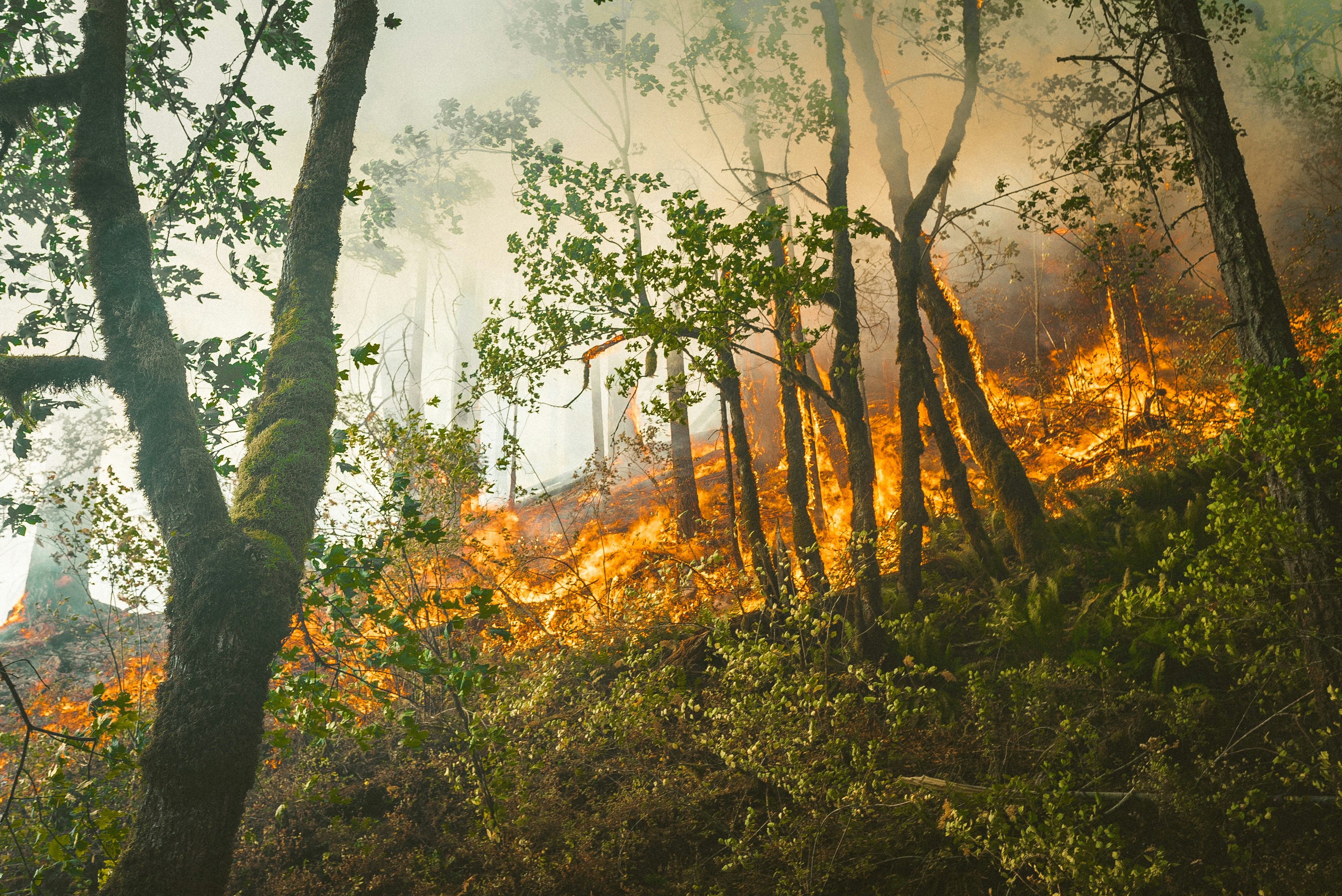
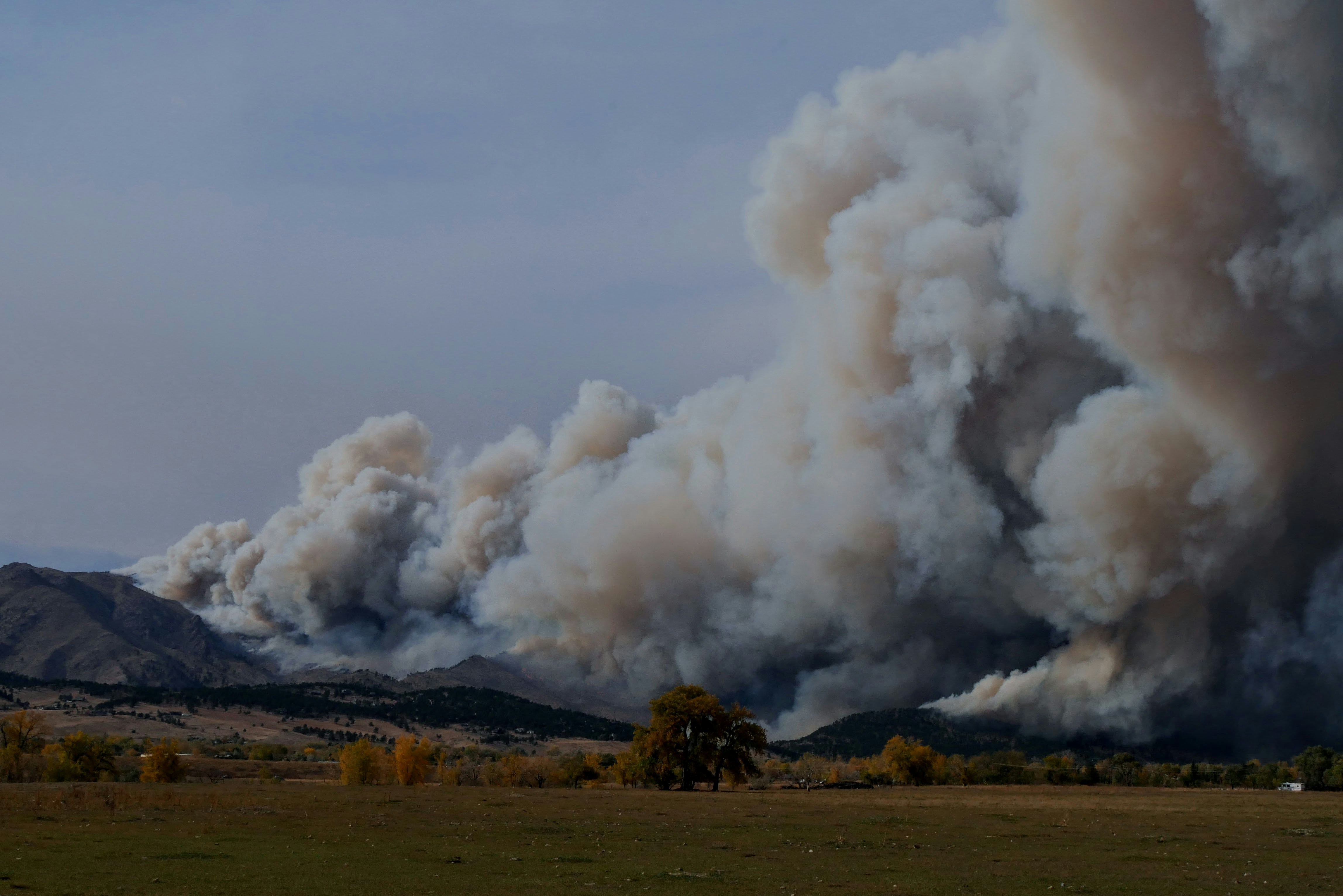
Colorado's 2026 wildfire season isn't a forecast anymore. It's already here.
By late April, Colorado fire crews had already dropped over 200,000 gallons of fire retardant — and the peak of fire season hadn't started yet. The 24 Fire near Colorado Springs burned more than 7,300 acres. The County Road 169 Fire in Elbert and Lincoln Counties scorched nearly 5,600 more. In total, more than 15,000 acres burned in Colorado before May, more than double the average for this point in the year. The National Weather Service has already issued 114 Red Flag Warnings statewide — the highest year-to-date count in at least two decades.
Then, on April 30, Governor Jared Polis stood in front of a hangar at Rocky Mountain Metropolitan Airport in Broomfield and said what most Coloradans already suspected: there is a "significantly increased risk" of wildfire across the Front Range and Western Slope this summer, particularly in June, July, and August.
The question isn't whether this is a bad fire year. It is. The question is whether you've done anything about it.
Why 2026 Is Different
Every Colorado fire year has its warnings. This one has more than most, and the numbers behind them are worse than they look.
Colorado's statewide snowpack hit its lowest level in recorded history this spring. As of early April, snow water equivalent across the state stood at just 22% of the historic median, according to the Natural Resources Conservation Service. The snowpack peaked weeks ahead of schedule — in late February instead of early April — and then collapsed during a record-breaking heat wave in March. That matters because late-season snowpack is what keeps soils and vegetation wet through May and into June, which is exactly when fire conditions get dangerous. This year, that buffer was gone before the calendar turned to spring.
Drought has followed. As of the last week of April, drought covered the entire state of Colorado — 100%. Much of the northwest corner was in exceptional drought, the most severe category the U.S. Drought Monitor uses. The Denver metro was in extreme drought, the second worst. At this point last year, only 44% of the state was in any level of drought. Mike Morgan, director of the Colorado Division of Fire Prevention and Control, said it plainly: 95% of the state is expected to be in some level of drought through June and July.
Besides this, the federal resource picture has gotten harder. Colorado is competing for national firefighting assets with Utah, New Mexico, Arizona, and other states that had similarly dry winters. Federal disaster aid denials under the current administration mean that recovery — not just response — will fall more heavily on the state and on homeowners themselves. Governor Polis said it directly: if federal disaster partnerships disappear, "that would fundamentally change the nature of the federal relationship with the states."
That change lands on you. Not abstractly — on your house, your belongings, and your family's finances.
Reading the Colorado wildfire risk map: where the risk is highest
Not all of Colorado burns the same way, and knowing where your property sits on the Colorado fire risk map is the first step toward understanding your exposure.
The Colorado State Forest Service maintains the Colorado Wildfire Risk Public Viewer at climate.colorado.gov, which maps burn probability across the state and layers in data including historic fire perimeters, Firewise USA site boundaries, and a Social Vulnerability Index. If you haven't pulled up your address on that tool, do it today.
For 2026, the Colorado Division of Fire Prevention and Control has identified the Front Range — from the Wyoming border down through Jefferson, Boulder, Larimer, El Paso, and Teller Counties — as the highest-risk corridor through June and July. The northwest corner of the state, including Garfield, Routt, and Moffat Counties, faces similar or elevated risk by summer. The I-25 corridor isn't just high-growth territory anymore. It's high-fire territory, where housing density and fire behavior collide.
The Wildland-Urban Interface — the WUI — is where most of Colorado's catastrophic fire losses happen. The Marshall Fire proved that WUI fires don't stay in the mountains. They move through subdivisions, jump fences, and take whole neighborhoods. If your home sits within a mile of open space, rangeland, or forested hills, you're in or adjacent to the WUI. Act accordingly.
First: Look at Your Insurance Before the Smoke Arrives
There's a sequence to fire preparation, and most homeowners get it backwards. They think about defensible space, go-bags, and evacuation routes — and they're right to think about those things. But they skip the step that determines whether they can financially recover after the fire passes.
Pull the declarations page of your insurance policy. Then read it.
Your dwelling coverage limit — the number next to "Coverage A" — is often the maximum your insurer will pay to rebuild your home. Compare that number against current construction costs in your area. In Colorado right now, standard residential construction runs roughly $300 to $500 per square foot, and higher in mountain communities. On a 2,000-square-foot home in Garfield County or Jefferson County, the math can leave a homeowner short by $100,000 or $200,000 before anyone has even filed a claim.
Ask your agent three specific questions. First: does my policy include extended replacement cost or guaranteed replacement cost coverage? If not, ask for it. Extended replacement cost adds a buffer — typically 20% to 50% above your dwelling limit. Guaranteed replacement cost pays whatever rebuilding actually costs. Both are available from most Colorado carriers. Second: does my policy include ordinance and law coverage? When a home is rebuilt after a total loss, current building codes may require upgrades the original structure didn't have — upgraded electrical, fire-resistant materials, updated energy standards. Without this endorsement, those upgrade costs are yours. Third: what is my actual loss of use dollar limit, and how long will it last? With rebuilds in Colorado running 18 to 30 months, a policy that runs out of loss of use coverage at month twelve is a serious problem.
And note this: the Trump administration's denial of disaster declarations for Colorado, which Governor Polis flagged directly in the April 30 briefing, means FEMA assistance after a major fire event is not guaranteed the way it once was. Your private insurance is no longer a backstop to federal recovery aid. In 2026, it may be the only backstop you have.
The Coverage Gap: A Concept Every Homeowner Needs to Understand
The coverage gap is the difference between what your insurer will pay and what it costs to rebuild. In Colorado's current construction market, that gap is wide — and after a large wildfire event, it widens even further.
Here's how to think through it for your own policy:
Start with your dwelling coverage limit. Divide it by your home's square footage. If the resulting number is below $350 per square foot, there's a real possibility you're underinsured even before accounting for demand surge. After a major fire that destroys hundreds of homes simultaneously — like the Marshall Fire did in December 2021 — regional construction costs spike by 20% to 40% as contractors and materials get scarce. Standard policies don't anticipate demand surge. Your coverage limit is a snapshot of what rebuilding cost when you set the policy, not what it will cost when you need it.
Run the numbers now, before you need them. If the gap is significant, call your agent this week. A coverage increase that closes a $150,000 gap typically adds a few hundred dollars to your annual premium. That's not a trivial cost. It's not a ruinous one either.
What to Document Before Fire Season Peaks
If a fire takes your home and you don't have documentation of what you owned, you're going to fight your insurer over every line item of your personal property claim. Don't put yourself in that position.
Do a home inventory now. Walk every room with your phone and shoot video — open every closet, every cabinet, every drawer. Narrate as you go: brand names, approximate ages, quantities. Pay special attention to high-value items: jewelry, electronics, firearms, art, collectibles. Note serial numbers where you can find them. Pull receipts or purchase records for major items and photograph them.
Store the inventory somewhere that survives the fire. Email the video files to yourself, upload them to cloud storage, or save them on a drive kept off the premises. A home inventory that burns with the house doesn't help you.
While you're at it, photograph your home's exterior — all four sides, the roof, the foundation. Document outbuildings, fencing, landscaping. These photographs establish baseline condition and become evidence in a coverage dispute if your insurer later contests the scope of your loss.
The physical prep list: how to protect your home from wildfire
Once the insurance piece is handled, the physical preparation matters. Colorado has stood up a Wildfire Resiliency Code Board to develop model building and fire codes for high-risk areas, and the work below lines up with where that code is headed.
Defensible space is the most documented factor in whether a home survives a wildfire. Colorado law requires 100 feet of defensible space around structures in high-risk areas. Zone 1, the 30 feet immediately surrounding your home, should be clear of dead vegetation, wood piles, propane tanks, and anything that carries fire to your exterior walls. Zone 2, from 30 to 100 feet out, should have reduced fuel — thinned trees, mowed grass, cleared brush.
Roof and gutters. Embers travel miles ahead of a fire front and land on roofs and in gutters packed with pine needles and leaves. Clean your gutters now. If your roof is wood shake or another combustible material, ask your insurer about Class A fire-rated roofing alternatives — and ask whether a roof upgrade affects your premium or renewal status.
Vents and openings. Embers enter homes through attic and foundation vents. Install 1/8-inch metal mesh screening on all exterior vents. Check that window screens are intact.
The go-bag and the go-plan. Know your evacuation zone. Sign up for emergency alerts through your county — Larimer County uses CodeRED, Boulder County uses Everbridge, Garfield County uses the state's CO-Alert system. Prepare a go-bag that includes identification documents, insurance declarations pages, prescription medications, and financial records. Know two routes out of your neighborhood in case one is cut off.
A Word on the Insurance Market
Colorado homeowners in wildfire-prone areas are increasingly discovering that their insurer doesn't want to renew them. Several major carriers have pulled back from high-risk ZIP codes across the Front Range and mountain communities. If you've received a non-renewal notice, or if you're shopping for coverage in an area that's been reclassified as high-risk, you may be looking at the Colorado FAIR Plan.
The FAIR Plan is the state's insurer of last resort. It covers fire. It does not cover everything a standard HO-3 policy covers, and its limits are often too low to support a full rebuild. If you're on the FAIR Plan, you need a difference in conditions policy from a separate carrier to fill the gaps — and you need to make sure the combined coverage is sufficient, not just present.
The insurance market isn't going to stabilize on its own before this summer. If your coverage situation is uncertain, resolve it now.
The Bottom Line
Mike Morgan, the director of the Colorado Division of Fire Prevention and Control, said something worth sitting with: "Using the term fire season doesn't make sense anymore. It's a fire year."
He's right. The 2026 Colorado wildfire season is already underway, the conditions are as bad as the state has seen in recorded history, and June and July — the peak months — haven't started yet.
You still have time to close coverage gaps, document your belongings, clear your defensible space, and know your evacuation route. That window is open right now. It won't stay open.
Do the work before the smoke tells you it's too late.
This article is written for general informational purposes and does not constitute legal or insurance advice. Coverage terms vary by policy and carrier. For questions about a specific claim or coverage dispute, consult a licensed Colorado attorney or insurance professional.
You're not alone.
Work with an award-winning, experienced lawyer who can make a difference in your case.
Award-winning representation across Colorado's most complex injury and insurance cases.