
Commercial Fire Damage Claims in Colorado: What Your Business Is Owed
Reviewed by
Nelson Waneka
Updated
After a commercial fire in Colorado, document the building and the inventory before cleanup, track every dollar of lost income for the business interruption claim, and get any denial or lowball offer in writing. Colorado’s bad-faith statute protects businesses as well as homeowners, and an unreasonable denial or delay can cost the insurer two times the covered benefit.

A fire at a business is three losses at once. The building burns, the stock and equipment inside it burn, and the income stops the same afternoon. Most commercial property policies are written to answer all three, but in separate coverage parts with separate limits, separate rules, and sometimes separate adjusters who don’t talk to each other. That’s where commercial fire claims come apart, and it’s why the first week matters more than the first month.
Does commercial property insurance cover fire damage?
Almost always — fire is the peril commercial property insurance was built for. The U.S. Small Business Administration describes commercial property coverage as protection for company property against fire, smoke, wind, hail, and vandalism. The harder question is how much the policy pays, and for what. A typical commercial form covers the building, your business personal property (equipment, furniture, stock), and sometimes the improvements you made as a tenant. Each has its own limit. Replacement cost and actual cash value pay very different numbers, and many policies pay full replacement cost only after the repair is actually done.
Read the declarations page and every endorsement, not the summary your agent emailed. Three provisions often decide more of a commercial fire claim than the fire itself: a coinsurance clause that cuts the payout if the building was insured for less than the policy requires, a vacancy provision that limits coverage on a building left empty too long, and ordinance-or-law coverage for the cost of rebuilding to current code. If you lease, check which policy covers what; the building is often your landlord’s, the contents yours. Fire triggers the coverage. The policy decides the check.
How do I document a commercial fire loss?
Before anything gets hauled away, photograph and video every room, every rack, every machine. Wide shots first, then serial numbers and labels. Keep damaged inventory and equipment until the adjuster has seen it, or until the insurer agrees in writing that you can dispose of it. Pull your inventory counts, purchase invoices, and fixed-asset list from the accounting system; if the records burned too, your suppliers, your bank, and your accountant have copies. Get your own repair estimate from a licensed contractor, and for equipment, a quote from the vendor who services it.
And protect what’s left. Your policy requires you to prevent further damage: board up the openings, tarp the roof, dry out what the firefighting water soaked. Reasonable mitigation costs are generally covered, so keep every receipt. Skipping it hands the insurer an argument that part of the damage is yours.
Then build the file the insurer will have to answer. Every phone call gets a follow-up email, and every request gets a dated response. When we open a commercial fire file, the first thing we check is whether the business’s own record is as complete as the adjuster’s. Usually it isn’t. That’s easy to fix in the first month and hard to fix in the tenth.
What is a business interruption claim after a fire?
Business interruption coverage replaces the income you lose while covered physical damage keeps the business closed or slowed, and under many forms it also pays the expenses that don’t stop when the doors do: payroll, rent, loan payments. It isn’t on every policy. It’s a separate coverage part, usually tied to direct physical loss at your premises, and it pays only for the “period of restoration,” the time it should reasonably take to repair and reopen. That isn’t always the time it actually takes. Many policies add a waiting period before income coverage begins, and some include extra-expense coverage for the cost of operating from a temporary location.
The fight is almost always over two numbers. How long should restoration take? And what would you have earned? Answer both with records: tax returns, monthly profit-and-loss statements, sales by season, and a calculation from your accountant. A restaurant in Aspen or Vail that burns in November didn’t lose an average month. It lost its season. Our business interruption claims page covers the income side in depth.
Why do commercial fire claims get denied or delayed?
Some delay is legitimate. A fire of uncertain origin brings a cause-and-origin investigation, sometimes by the fire marshal and sometimes by the insurer’s own expert, and set fires are a real part of the picture: in the U.S. Fire Administration’s 2024 national estimates, more than one in ten nonresidential building fires were intentional. So expect hard questions, requests for your financial records, and possibly an examination under oath. Cooperate. Refusing lets the insurer argue you breached the policy’s cooperation clause, which turns a delay into a denial. Have a lawyer read the file before the exam and sit beside you during it.
What isn’t legitimate is a file that stays “under investigation” after the investigation is done. Commercial fire claims stall in familiar places: an exclusion stretched past its language, a coinsurance penalty built on an inflated valuation, a building payment held back to pressure the income claim. Colorado’s unfair-claims law treats that last move as an unfair claim practice by name: failing to promptly settle one part of a policy’s coverage, once liability is reasonably clear, to influence the settlement of another. That list is enforced by regulators, not by private lawsuits. In a bad-faith case, though, it’s evidence. So is the regulator’s own benchmark: property insurers are expected to decide or pay within sixty days after a valid and complete claim unless there’s a reasonable dispute. If the file has gone quiet, you can file a complaint with the Colorado Division of Insurance.
Underneath every one of those tactics is the same law. Colorado says an insurer may not unreasonably delay or deny payment of a claim for benefits owed, and the statute’s definition of who it protects names corporations, partnerships, and other entities, not just individuals. When a court finds the delay or denial unreasonable, the business can recover two times the covered benefit plus attorney fees and costs, in addition to the benefit itself. Our insurance bad faith page covers how that case gets made.
How long do I have to sue my insurer?
Colorado generally gives you three years to sue for breach of a contract, including an insurance policy, and insurance bad faith claims generally run two. On a commercial policy, the deadline for the contract claim is often shorter, and it’s written into the policy. Many commercial property forms carry a suit-limitation clause, and Colorado courts generally enforce reasonable ones. The Colorado protection that overrides short suit deadlines in homeowner policies doesn’t reach a commercial one. Find that clause the week of the fire, not the month before it runs.
Your own obligations don’t pause either: prompt notice, a sworn proof of loss on the schedule the policy sets, and the records the insurer reasonably asks for. Keep every deadline the policy gives you, even while the insurer misses its own. A missed proof of loss has sunk claims that were otherwise won. Read yours now.
The same law applies to every peril. If water came first, see commercial water damage claims; for a home, house fire and smoke damage claims; for a mountain blaze, wildfire claims. The full picture is on our property insurance claims page, and you can see what shortchanged property claims have recovered on our results page.
Bring the policy with every endorsement, the insurer’s letters, your inventory records, and your recent financials. We’ll tell you what each coverage part should pay and where the insurer’s number falls short. Nelson Waneka reads these files himself. Request a Consult or call (970) 200-2222. No fee unless we recover.
Not sure the insurer is treating you fairly?
Send us the letter and the policy. One call usually settles whether there’s a real dispute.
Request a Consult
Common questions
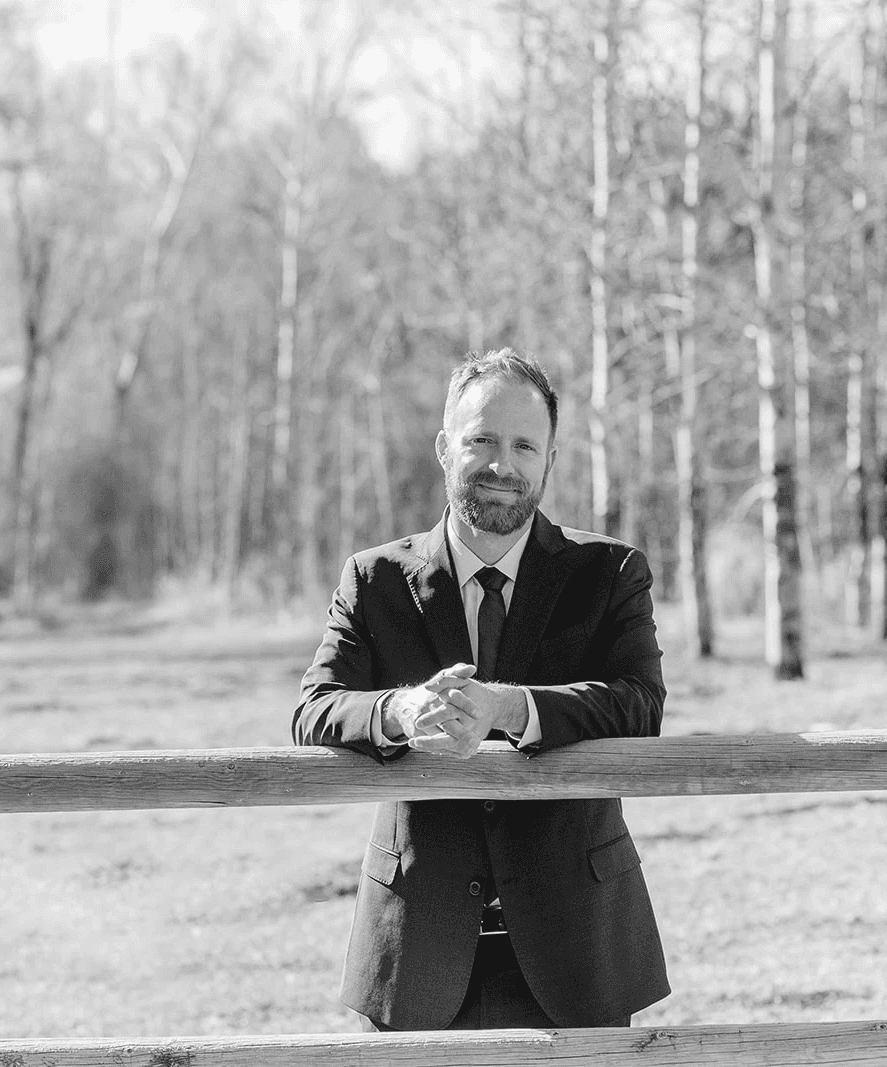
Reviewed by
Nelson Waneka
Nelson has tried insurance and insurance bad-faith cases across Colorado since 2010 — hail, wildfire and water losses in front of Western Slope juries, at the Colorado Court of Appeals, and in the negotiation rooms where most claims actually resolve. Other attorneys retain him as an expert witness on how claims should be handled. He has spent his whole career on one side of the table: the policyholder’s.
Best Lawyers “Lawyer of the Year,” Insurance Law (2×) · Chambers USA ranked · Colorado Super Lawyers Top 100 · Colorado Bar #42913
Based in Glenwood Springs. Serving the Western Slope: Aspen · Vail · Grand Junction · Montrose · Basalt — mountain-town claims handled by a mountain-town firm, not a Denver satellite.